
Jussi Viljanen
SEO consultant
5
min read

How to optimize product pages for online stores?
Product page optimization is a balancing act between search engine visibility and user experience. At best, these two support each other: a search engine-friendly page is often also user-friendly.
Optimization always starts by identifying the customer's needs. What exactly are they looking for, what are they interested in, and what information do they need to make a purchasing decision?
The product page must be clearly structured, technically sound, load quickly, and inspire trust in the customer. On top of this, a well-optimized product page can be built in various ways, giving it a good chance of performing well in search results and bringing customers to the online store.
Keyword research and the use of keywords

Optimization of product images

Product page content and product description
The content of the product page is a critically important element from an SEO perspective, but at the same time, it is an important factor in the customers' purchasing decisions. When creating SEO content, it is essential to remember that it should also be informative, persuasive, and supportive of the purchasing decision from the customer's perspective.
The product description should address the questions that concern customers, such as:
How does the product solve the customer's problem?
What are its main features and benefits?
How does it differ from competitors?
Which target audience is it best suited for?
While answering such questions in the text, the following criteria should be considered:
Unique content: Each product page must have a unique description. Copying the description texts provided by the manufacturer verbatim is a common mistake. Google will likely penalize or at least not reward if the content is duplicate content copied from elsewhere. Therefore, modify the text and enhance the descriptions with your own perspectives and expertise.
Sufficient length: The optimal length of a product description varies based on the complexity of the product. However, aim for at least 50-100 words of pure descriptive text, but preferably more if it is relevant. In addition, the content should come from product data, features, etc. Google gets the material it needs from rich and fair content, based on which it forms a perception of the page and its expertise.
Structured content: Search engines love well-structured content. Use HTML elements like tables and lists to present product information. Also, ensure hierarchical HTML headings are used correctly with H2 and H3 level headings.

Again, an example from the Nummi Bicycle Cannondale Topstone 2 page, where they have listed the technical features of the bike in a well-structured format.
Use of keywords in product content
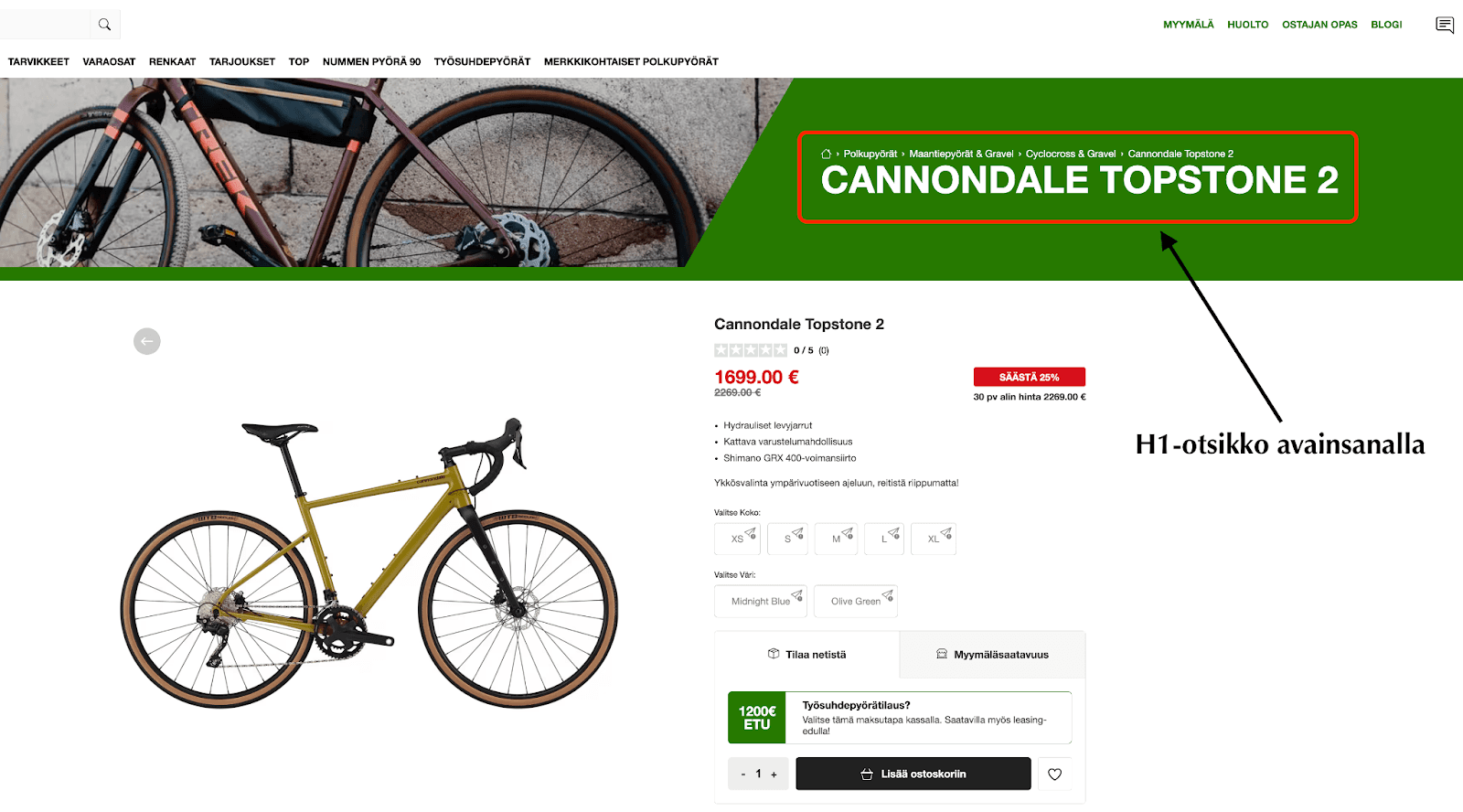
The main keyword for the product page should preferably be used in important places like the URL, meta title, and H1 heading. The product description and other content are excellent places to use secondary keywords and semantic terms that describe the main topic of the page.
Google does not just show pages in search results according to whether it finds the exact term on the page, but based on an overall assessment, influenced by how comprehensively the topic is covered. Therefore, it is crucial to incorporate other keywords revealed in keyword research as well as semantically related terms into the content.
If the keyword research revealed, for example, 10 relevant keywords for the product, try to include at least 3-5 of them naturally in the content. Keywords do not need to be forced, but the more they can be incorporated naturally and relevantly into the content, the more Google will notice them, and the ability to rank better for all search terms related to the topic increases.
Do not stuff keywords everywhere or too much, as Google may interpret this as excessive manipulation, causing rankings to drop. Use keywords, but do so sensibly.
Internal linking from the perspective of conversion and navigation
Internal linking within the website is one of the most important aspects of search engine optimization. This also applies to product pages in an online store.
The effectiveness of internal linking is based on the signals given to search engines regarding the relevance between pages, the importance of the linked pages, and the distribution of power brought by external links.
However, on product pages, internal linking also acts as an excellent converting and sales-increasing element, and it helps customers navigate the site.
Internal links from content and product descriptions
Each product page should have text content that describes the product and its features. Often, this content includes mentions of things like manufacturers, brands, or product categories. These may very well have their own page in the online store, to which it is good to link. This way, you can support the category page in search engines and also give users the opportunity to browse products in that category.

Breadcrumbs - or breadcrumb links
By ensuring good navigation, you help users and search engines move around the site. It should be easy to access the category page, the homepage, or other key store pages from product pages.
Breadcrumbs are a good way to achieve this. The breadcrumb trail indicates the product page's position in the address hierarchy and provides links to the product page's parent pages, for example:
Homepage > Men's Jackets > Men's Leather Jackets > Ranger Faux Leather Jacket Black Jerone

Other popular and related products
Displaying other products on the product page is also an excellent way to obtain internal links to other product pages, but these particularly affect conversion and upselling. By showing customers other relevant and popular products on the product page, it can encourage them to add more items to the cart or help them find that one important product they are looking for.
For example, a bicycle product page may showcase related products such as a cycling helmet, bike lock, water bottle, or other similar items.

Reviews and user-generated content
Among other things, Google increasingly values websites today that have rich, genuine content from various perspectives. A very natural and good way for e-commerce to achieve this is through user product reviews.
Reviews on product pages, especially if they are positive, further increase customer trust, which can be a very positive thing for sales. At the same time, product reviews are self-updating, highly relevant content that Google also appreciates. Product reviews naturally contain good keywords and various semantic terms related to the product.
Customers should be encouraged to leave reviews, as for example, AI Commerce's client company Ledstore does by offering easy participation in a gift card raffle.

The use of schema markup and rich search results



Summary
Search engine optimization of product pages is a great way to increase visibility in search engines and attract customers without paid advertising. Product pages optimized for search engines often convert well and are pleasant for the user experience.
Through search engine optimization, product pages can attract the very potential customers who are already ready to buy and who are actively searching for the product. Key elements of SEO for product pages include careful keyword research, a clear URL structure, optimized metadata, an H1 heading, high-quality and comprehensive product descriptions, and correctly implemented Schema markup.
However, the performance of product pages should be measured and monitored. Search engine optimization is a long game, and the page needs to be developed regularly based on the results observed. By avoiding common mistakes such as using directly copied content, completely lacking internal links, or using poor quality product images, it can be ensured that product pages have a good chance to succeed and generate results.
Frequently Asked Questions
What is product page SEO in E-Commerce?
What are the most important keywords for product page SEO?
How long should a product description be for SEO?
How should product images be optimized for search engines?
Which schema markups are most important for e-commerce product pages?
Why is the canonical tag important for e-commerce product pages?
How can I improve product page conversion rates?
Table of contents
You might also like










Talk to our experts