Lauri Koskensalo
Head of Growth
7
min read
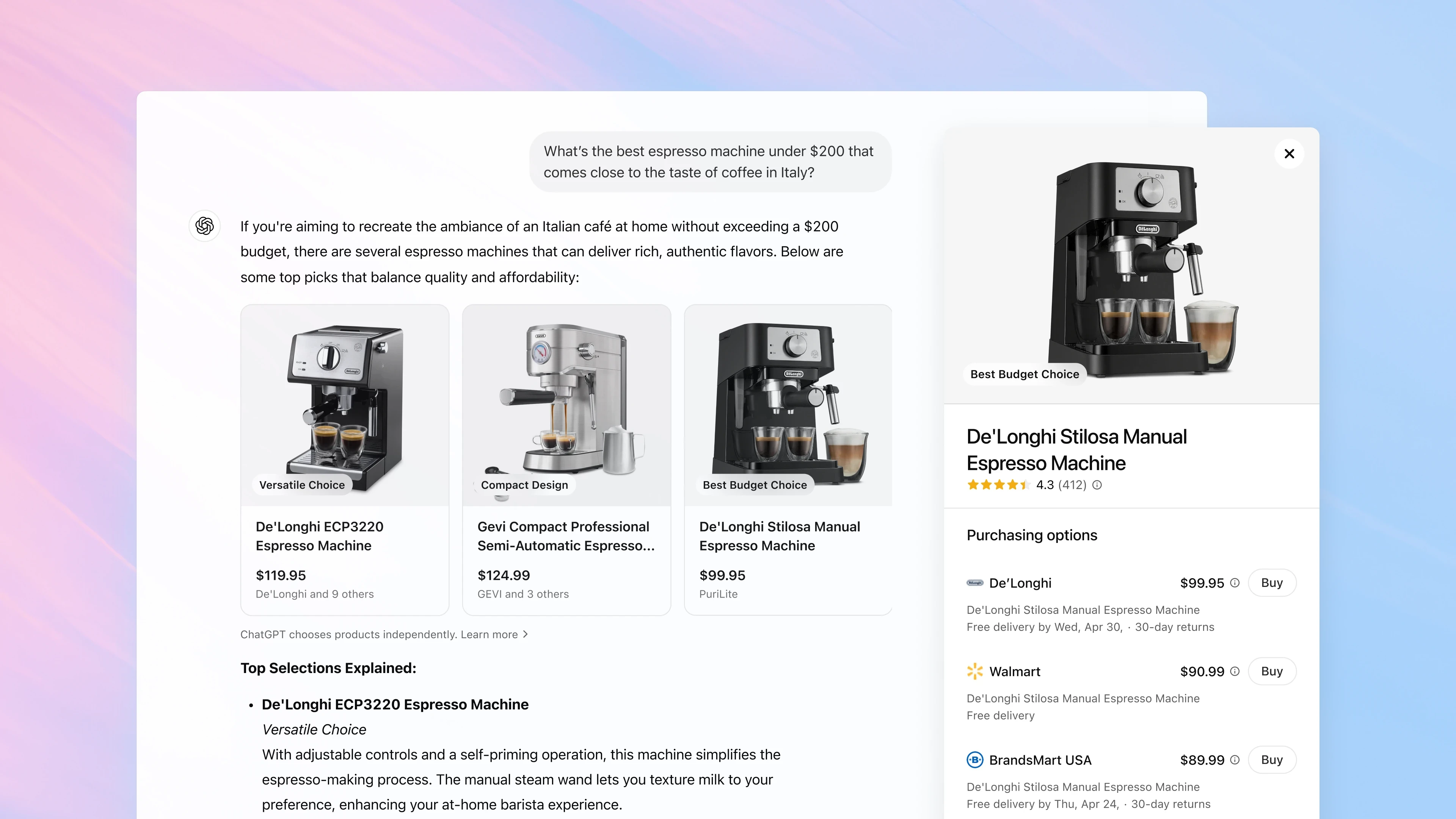
A seismic shift is underway in B2B digital commerce. As AI agents step in to guide, assist, and sometimes even act for buyers, the question of 'who owns' the AI interface has become commercially urgent. Traditionally, brands and distributors competed for digital attention through SEO, marketplaces, and direct account relationships. Now, the battleground is evolving: will your buyers interact through your own AI-powered agent, a third-party generative platform, or someone else’s channel? Practical Ecommerce recently highlighted that “ecommerce companies may soon compete not only for shoppers, but to own the AI through which those shoppers buy.” For B2B teams, the commercial stakes are especially high: losing the AI interface means risking visibility, pricing control, and even the customer relationship itself. Understanding this landscape is the first step to preparing your business for the next competitive era.
Defining the Category: Agentic Commerce in B2B
Agentic commerce is emerging as a new category, one where AI agents actively mediate, interpret, and execute parts of the buying journey. In B2B, this means transitioning from static online catalogs and email-driven RFQs to dynamic, context-aware workflows where AI connects structured product data, customer-specific pricing, and process automation. Real-world agentic commerce spans both on-site AI agents (directly embedded in your store) and external agents (in generative answer engines or procurement platforms). As Anthropic’s recent commercial agent blueprint shows, these AI systems can already search catalogs, assemble complex baskets, and negotiate delivery within approved guardrails. For B2B leaders, success in this category demands more than adding a chat widget, it requires a managed platform built on structured, synchronized data and adaptable workflows. AI Commerce Cloud positions itself at the heart of this shift, unifying product information, commerce, and sales operations as a launchpad for agentic journeys.
The Strategic Choice: On-Site AI Agent or External Platform?
B2B commerce teams now face a fork in their digital strategy: should you prioritize building your own on-site AI shopping agents, optimize for third-party generative platforms, or pursue a hybrid approach? Each path has implications for data governance, customer intimacy, and long-term revenue. Deploying an on-site agent, tightly linked to your product data and workflows, lets you control buyer experience, capture customer intent, and automate quoting, pricing, or support. However, the commercial reality is that buyers will increasingly use third-party AI interfaces (from large platforms or answer engines) outside your direct reach. Preparation means not just supporting your own agents, but also making your structured data, rules, and content ready for external AI consumption, without handing over the entire relationship. Category leaders are already implementing composable architectures and strong product information management to support both models.
Structured Data as the Fuel for Agentic Buyer Journeys
Workflow Readiness: Beyond Data to Operational Transformation
The Risks of Ceding the AI Interface to Others
If B2B companies ignore the agentic commerce transition, the risk is clear: lose direct buyer relationships to third-party AI, lose pricing and negotiation differentiation, and find your data interpreted (or misrepresented) by competitors’ or platforms’ AI. Retailers and brands who failed to optimize for marketplace or search engine proxies in earlier digital eras saw similar headwinds. The agentic commerce category raises the bar: to avoid being disintermediated, B2B companies must make their product, pricing, and fulfillment data reliably accessible, but in a controlled framework that preserves commercial differentiation. This is both a technical and contractual challenge. Leading enterprises are working to define the right balance: fostering AI accessibility without ceding sensitive customer, pricing, or negotiation data to uncontrolled channel partners or aggregators.
A Framework for Taking Ownership: Practical Steps Forward
Sources
What is AI agent ownership in B2B commerce?
Why does agentic commerce matter for B2B teams now?
How do I prepare my product data for AI agents?
What are the risks if we don’t deploy our own AI shopping agent?
How can we start piloting agentic commerce capabilities?
Table of contents
You might also like










Talk to our experts